
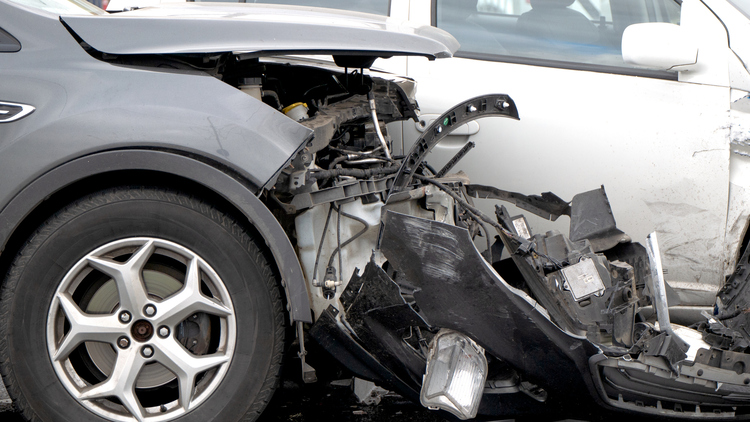
A T-bone collision most commonly happens when one driver strikes the side of another vehicle head-on. These collisions get their name from the T-shape the vehicles make. Unlike other types of traffic collisions, determining fault in a T-bone accident is generally straightforward: The at-fault driver is the driver who failed to properly yield to oncoming traffic. This can be either the turning driver or the one going straight; fault depends on the circumstances of the collision.
If you suffered T-bone accident injuries, they’re probably severe, as both head-on and side-impact collisions are two of the most dangerous types of car accidents. If you didn’t cause the wreck, our Louisville personal injury attorney can help you secure fair compensation.
Determining who’s at fault in a T-bone accident under Kentucky laws
Kentucky laws permit plaintiffs in a car accident case (the person who did not cause the accident) to file a suit against the at-fault driver for damages, including medical bills, property damage, and lost wages. Although you are entitled to $10,000 in PIP coverage, PIP will only make payments up to $10,000 for medical expenses, limited lost wages, and out-of-pocket expenses. It will not fully compensate you for the injuries, lost wages, and pain and suffering. Accordingly, you can pursue an insurance claim or file a lawsuit against the other driver to recover the remainder, including consideration for your pain and suffering. So, establishing fault in the collision is critical to the success of your claim.
The driver who failed to yield, violated traffic laws, or didn’t follow the directions at a guided intersection is typically the one at fault for the collision.
T-bone accident liability examples
All drivers are expected to follow traffic laws; you implicitly consent when you receive your Kentucky driver’s license. This includes properly yielding to other drivers who have the right of way. Failure to yield plays a critical role in determining liability in side-impact collisions, so it’s important to understand the practical applications of this legal principle:
- Example #1: Driver A is making a left-hand turn on a green arrow. He’s hit mid-turn by Driver B, who was speeding to “beat” a yellow light and ends up running a red light. Driver B is liable for Driver A’s damages.
- Example #2: Driver A has the right-of-way at a 4-way stop. Driver B runs the stop sign, hitting Driver A as they turn. Driver B is at fault for the accident.
- Example #3: Driver A is trying to turn left on a blinking yellow arrow (must yield to oncoming traffic). Driver B has a green light, and is proceeding straight, but cannot stop in time to avoid hitting Driver A. Driver A is at fault.
These are fairly straightforward examples, although car accident claims can get a little more nuanced if both drivers share some fault in the crash. For example, if a driver turning left on a blinking green arrow would have had enough time to safely complete their turn but was hit broadside because the driver going straight through their green light was speeding, then both drivers may share in the blame. Your car accident lawyer investigates the collision and collects evidence proving that the other driver negligently violated traffic laws.
Kentucky’s comparative laws and T-bone accidents
Comparative fault laws in Kentucky permit drivers to recover damages if they were less than 100% responsible for the collision. In Kentucky, although exceedingly rare, a driver can recover as little as 1% of his damages if another driver is found to be 1% at fault (even if the suing driver is 99% at fault). Building a case demonstrating that the other driver shouldered the majority of the blame protects your settlement and prevents you from having to pay them damages.
In these cases, having a car accident attorney represent you is critical, as you can only recover damages from another driver to the extent you can prove the actions of the other driver were a substantial factor in bringing about the collision and your injuries.
Get the help you need
T-bone accidents can cause serious injuries and complicated claims. If you’ve been hurt in one, it’s important to have experienced attorneys on your side to protect your rights and pursue fair compensation.
Contact Grossman Green PLLC today at (502) 657-7100 for a free consultation. We’re ready to help you understand your options and fight for the justice you deserve.