

Electric vehicles (EVs) come with safety advantages, but they also introduce risks that don’t exist in traditional gas-powered cars. EV batteries can create fire risks in certain crash scenarios, though those situations are relatively uncommon. If you’ve been hurt in an EV crash, a Louisville car accident attorney at Grossman Green PLLC can help you understand your options and what comes next.
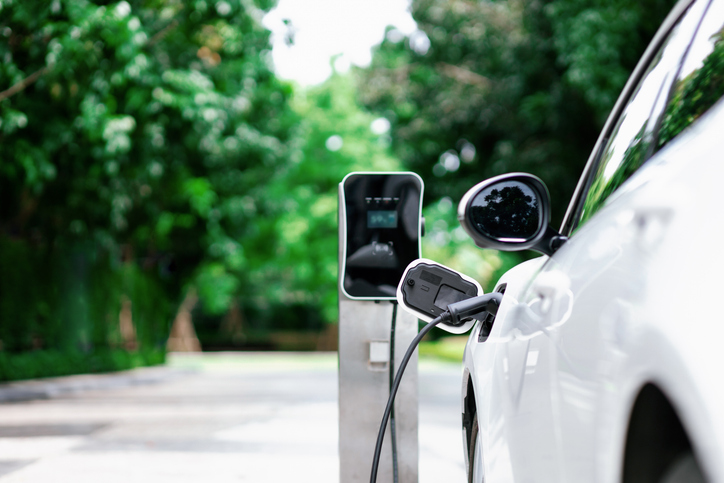
How do electric vehicles perform in crashes compared to gas-powered cars?
A study investigating whether electric vehicles are riskier ultimately concluded that “EVs have a higher risk profile” than traditional vehicles. When compared to internal combustion engine (ICE) vehicles, EVs “experience a 6.7% increase in significant first-party damage costs.” The cost of replacing an EV battery alone presents a significant financial burden.
EVs record fewer “harsh” driving events, such as harsh acceleration, braking, cornering, and speeding, but still have a higher rate of accidents.
What unique risks are associated with electric car accidents?
Electric cars are quiet, especially at low speeds. This low volume presents an increased risk for accidents involving vulnerable road users. Cyclist and pedestrian safety could be compromised if these parties cannot hear the approaching vehicle.
EVs get their power from battery packs with high-voltage systems. In rare cases, these systems can be damaged in a crash and lead to battery fires, which require different handling than gasoline fires. The vehicle also carries extra weight from these heavy batteries. As a result, the impact of an EV crash can cause substantial damage.
EVs can accelerate quickly, which may catch some drivers off guard. Inexperienced EV drivers could lose control when accelerating too quickly and injure themselves and others in a resulting crash.
Are electric vehicle fires more dangerous than gasoline fires?
An EV runs on a lithium-ion battery. The Alternative Fuels Data Center (AFDC) explains that most EVs have cut-off switches and methods for finding and isolating batteries and disabling the electrical system upon a crash. These features neutralize the dangers associated with battery fires in many crashes.
When EV batteries do catch fire, they behave differently from gasoline fires. The methods for extinguishing battery fires differ from those for putting out gasoline fires.
Further, an EV battery can erupt at the crash or burst into flames minutes, hours, or even days later. These delayed ignition risks are part of why emergency responders follow different protocols for EV crashes.
How does the weight of electric vehicles affect crash severity?
According to the Insurance Institute for Highway Safety (IIHS) a vehicle’s size and weight have a definite impact on crash severity. The heavier vehicle pushes the lighter one backward upon collision. As a result, there is “less force on the people inside the heavier vehicle,” and more on occupants of the lighter one.
In a crash with a non-electric car or SUV, the EV is likely the heavier vehicle.
EVs are getting even heavier
Another article from the IIHS explains that EVs are becoming heavier, and their weight may be a drag on safety. Many EVs weigh in at 6,000 pounds. Larger ones, such as the GMC Hummer, is 9,500 pounds. Most non-electric passenger cars range from 3,000 to 4,000 pounds, and non-electric pickup trucks come in at 5,000.
Per the IIHS, these weight differentials likely afford EV drivers “greater protection in a multivehicle crash.” The same design feature “comes at the expense” of those in the other vehicles.
Do electric cars reduce the risk of certain injuries?
Electric cars can reduce the risk of injuries for some, namely the EV’s occupants. The increased weight from the heavy battery often makes the EV a more powerful vehicle when involved in a crash with a non-electric car.
The battery also sits at the vehicle’s bottom-center. This positioning gives the car a lower center of gravity and reduces the risk of rollovers. EVs don’t have a large engine block in front. This means the frontal area can act as a “crumple zone” in head-on collisions and absorb more of the impact’s energy.
How is liability handled in an electric vehicle accident?
Liability is handled the same way in all car accidents, whether they involve EVs or not. An experienced attorney can investigate the crash to discover what caused it and who is liable for paying you damages.
Kentucky uses a no-fault system for car accidents. That means you usually turn to your own insurance first, regardless of who caused the crash. You can step outside that system and file a claim against the at-fault driver if your medical bills exceed $1,000 or your injuries meet certain legal thresholds. Kentucky also follows a pure comparative fault rule, so any compensation you receive can be reduced based on your share of fault.
We step in early to push back on fault claims that could reduce your recovery and help you avoid common misconceptions about car accident claims that could hurt your case.
Learn your options after an electric vehicle accident in Louisville
Grossman Green PLLC can help you explore your options and find the best way forward after an EV crash. We handle these cases from initial claim through litigation if needed. Contact us today for a free consultation. Call (502) 657-7100 or contact us online to get clear answers about your situation.