

Louisville Metro has identified 152 miles of roadway, about five percent of the city’s non-interstate network, that carry 55 percent of its fatal and suspected serious injury crashes. That set is called the High Injury Network, and it ranks 53 corridors. US 150, which is Broadway, ranks first.
The city ranks intersections separately. Dixie Highway at Pendleton Road comes first among signaled intersections, and West Broadway at South 24th Street comes first among unsignaled ones.
If you were hurt at one of these locations, a Louisville car accident attorney can review what the city and state have already recorded.
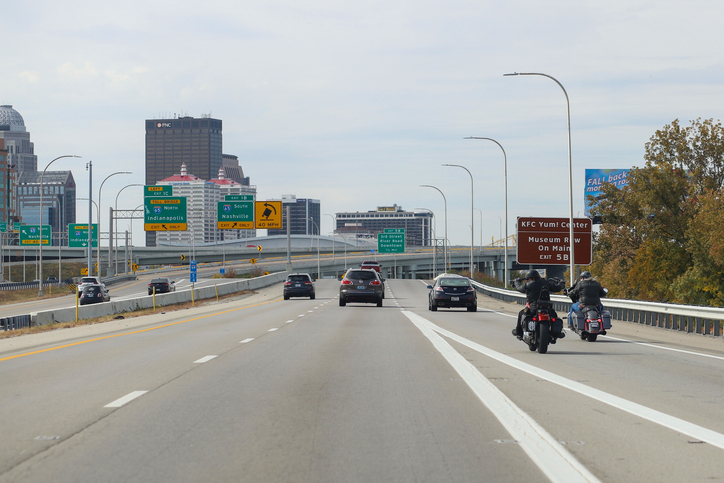
What is Louisville’s High Injury Network?
The High Injury Network is Louisville Metro’s data-driven ranking of roadway segments with disproportionately high numbers of fatal and suspected serious injury crashes. The High Injury Network covers 152 miles, roughly five percent of the city’s non-interstate roads, and those miles account for 1,213 such crashes.
Louisville developed the current High Injury Network in 2024 using crash data from 2018 through 2022, so the rankings reflect several years of severe crash history instead of a single year’s results.
Louisville’s roads see more than one fatal or suspected serious injury crash a day, spread across 3,170 miles of non-interstate routes. The network is the small share of those miles where the severe ones concentrate.
What are the most dangerous roads in Louisville?
Louisville publishes its corridors in rank order. Here are the top ten:
| Rank | Louisville road or corridor |
| 1 | US 150 (Broadway) |
| 2 | S. 7th Street |
| 3 | W. Broadway |
| 4 | US 60A (7th Street Road / Berry Blvd. / Taylor Blvd. / Winkler Ave.) |
| 5 | KY 1865 (Taylor Boulevard / New Cut Road) |
| 6 | US 60 (Shelbyville Road) |
| 7 | US 31E (Bardstown Road) |
| 8 | US 31W (S. 22nd Street / Bernheim Lane) |
| 9 | KY 61 (Preston Highway) |
| 10 | US 31W (Dixie Highway) |
Broadway’s entry is the longest segment near the top of the list, running 3.4 miles from South 22nd Street to Baxter Avenue.
Keep in mind that the ranking is severity-weighted, so a corridor rises on how serious its crashes were and not only on how many there were. And several streets appear more than once across the full 53 corridors, because the city breaks them into separate segments with their own endpoints. Bardstown Road shows up three times on the full list, and Shelbyville Road twice. This makes sense because they are heavily populated areas.
What are the most dangerous intersections in Louisville?
Louisville ranks intersections separately from corridors, and it splits them by whether a traffic signal is present. The rankings come from the city’s Safety Action Plan and use a severity-weighted crash method instead of a count of every reported collision.
Several of these crossings sit on corridors that are already in the corridor top ten. Dixie Highway and Broadway each appear on both lists, and Preston Highway contributes two of the five unsignaled areas.
Highest-ranked signalized intersections:
- Dixie Highway (US 31W) and Pendleton Road
- East Broadway (US 150) and South 22nd Street
- Cane Run Road (KY 1934) and Crums Lane (KY 2049)
- Shepherdsville Road (KY 2052) and Hikes Lane
- Greenbelt Highway (KY 1934) and Greenwood Road (KY 1931)
Highest-ranked unsignalized intersections:
- West Broadway and South 24th Street
- Dixie Highway (US 31W) and San Jose Avenue
- Preston Highway (KY 61) and Chateau Lane
- Preston Highway (KY 61) and Prestwood Drive
- Bardstown Road (US 31E) and Buechel Bypass
How many serious and fatal crashes happen in Louisville?
Preliminary Louisville Metro figures show that 94 people died on non-interstate roadways in Jefferson County in 2024, a 14 percent decrease from 2023. Those counts cover non-interstate roads, so crashes on the interstates running through the county sit outside them.
Statewide, Kentucky recorded 117,661 reported collisions on public roads in 2024, including 659 fatal collisions in which 707 people were killed.
Why are pedestrian deaths a concern in Louisville?
39 of those 94 deaths were pedestrians. That is a 26 percent increase over 2023 and the highest figure in at least ten years, in a year when total non-interstate deaths fell.
Louisville’s Vision Zero program is the city’s plan to end traffic deaths, and protecting people on foot is one of its main goals. In 2024, the city added 161 “head starts” at intersections with traffic signals. These give people walking a few seconds to start crossing before cars get a green light. The city also built 3.4 miles of new sidewalk.
People on foot have no protection in a crash. On a wide, busy road where cars move fast, being hit can cause serious or deadly injuries. If you were hit while walking, a Louisville pedestrian accident attorney can review what happened.
Why are many dangerous Louisville roads maintained by Kentucky?
Most of the network is not inside cities. About 85 percent of High Injury Network mileage is owned by the Kentucky Transportation Cabinet, which means many of Louisville’s highest-priority corridors are state-maintained rather than Louisville Metro-owned.
That distinction can affect a claim involving a roadway condition, because the entity that owned and maintained the road has to be identified before anything else about it does.
Injured in a crash on a dangerous Louisville road?
The location of a crash can impact the investigation. For example, fatal wrecks on state-maintained roads are usually subject to an investigation by the Kentucky State Police. These investigations can take time.
Attorneys may review prior crash data, roadway design, traffic controls, maintenance records, surveillance footage, and driver conduct. If a roadway condition may have contributed to a collision, determining whether Louisville Metro or the Kentucky Transportation Cabinet owned and maintained that stretch can matter as well.
Our attorneys handle Louisville injury cases from the first interview through appeal. If you were injured, the consultation is free. Call (502) 657-7100 or contact us.